Our Events
Conferences, workshops, and public events hosted or co-hosted by Delphi Global Research Center on Eurasian security and regional dynamics.
Upcoming Events
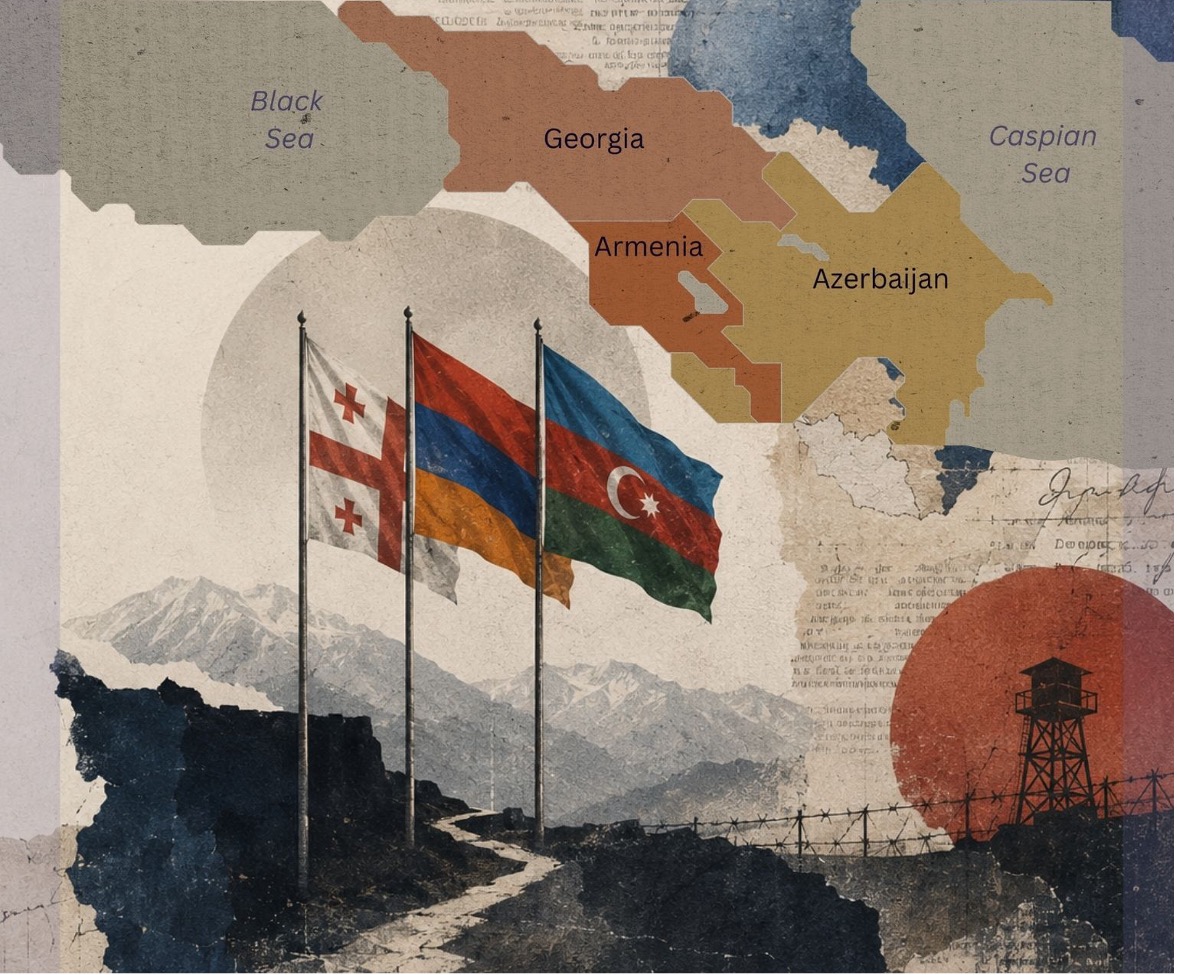
Wednesday, July 1, 10am ET. Via Zoom. As we enter a new phase of power dynamics in the South Caucasus, a set of questions merits thorough examination: How have recent conflicts in the South Caucasus reshaped regional power balances and security perceptions? How do Russia, Türkiye, Iran, and Western actors compete and cooperate in shaping Caucasus security dynamics? What scenarios could most plausibly destabilize the region in the coming decade, and how can they be mitigated? In order to address these questions, the New Strategy Center and Delphi Global Research Center have brought together experts from Armenia, Azerbaijan, Georgia, Germany, and the United States for this Zoom webinar.
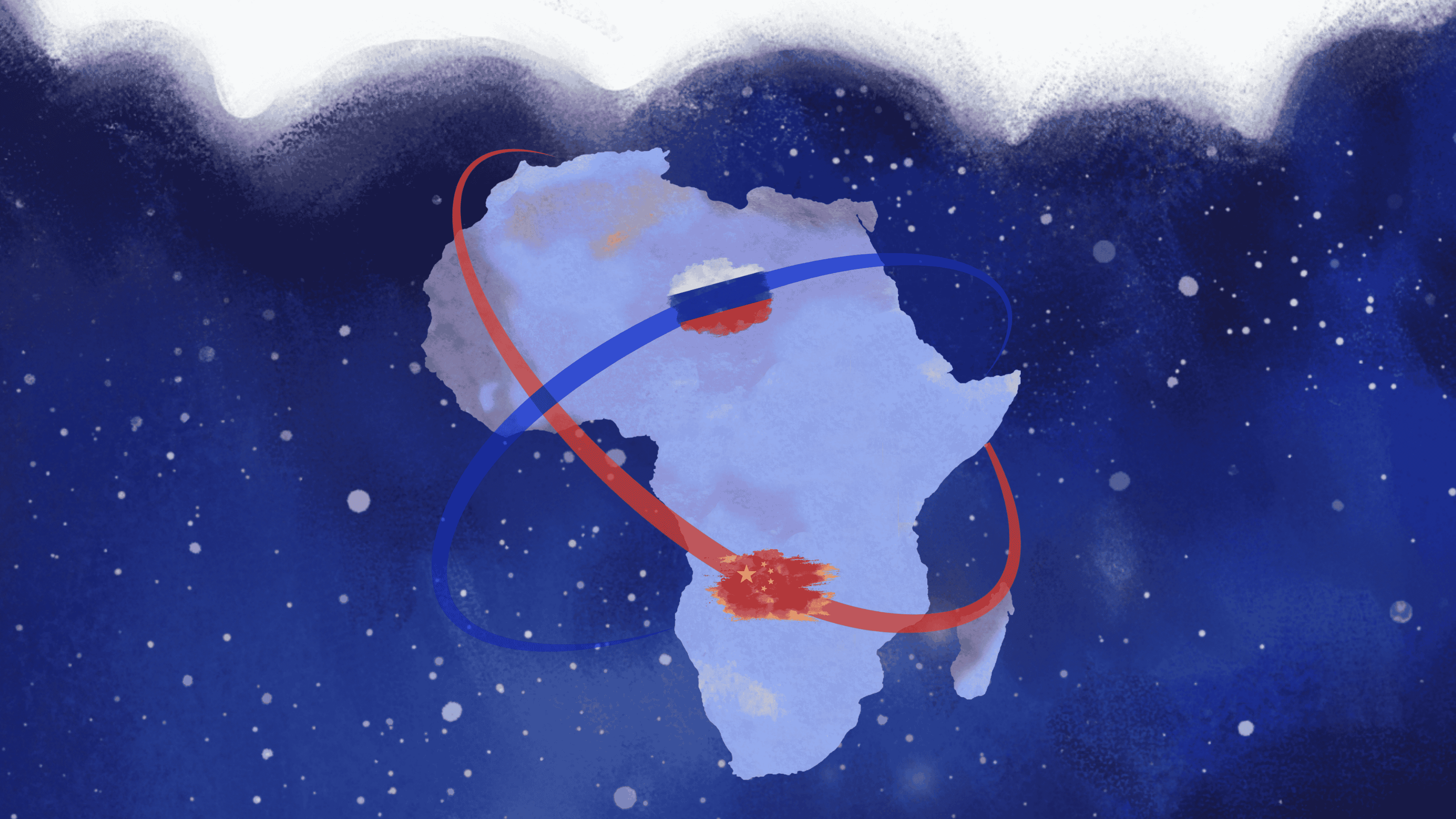
Tuesday, July 14, 10am ET. Via Zoom While China and Russia remain strategically aligned in their broader effort to challenge Western influence, their interests and behavior in Africa are increasingly diverging. The report contends that the contrasting approaches have become more pronounced since Russia’s invasion of Ukraine, which has constrained Moscow’s resources and pushed it toward increasingly opportunistic and disruptive forms of engagement. At the same time, growing uncertainty in the international system and shifts in US alliance behavior have weakened the external pressures that previously encouraged closer Sino-Russian coordination. As a result, Africa is emerging as a key test case for the limits of China-Russia strategic alignment.
Past Events
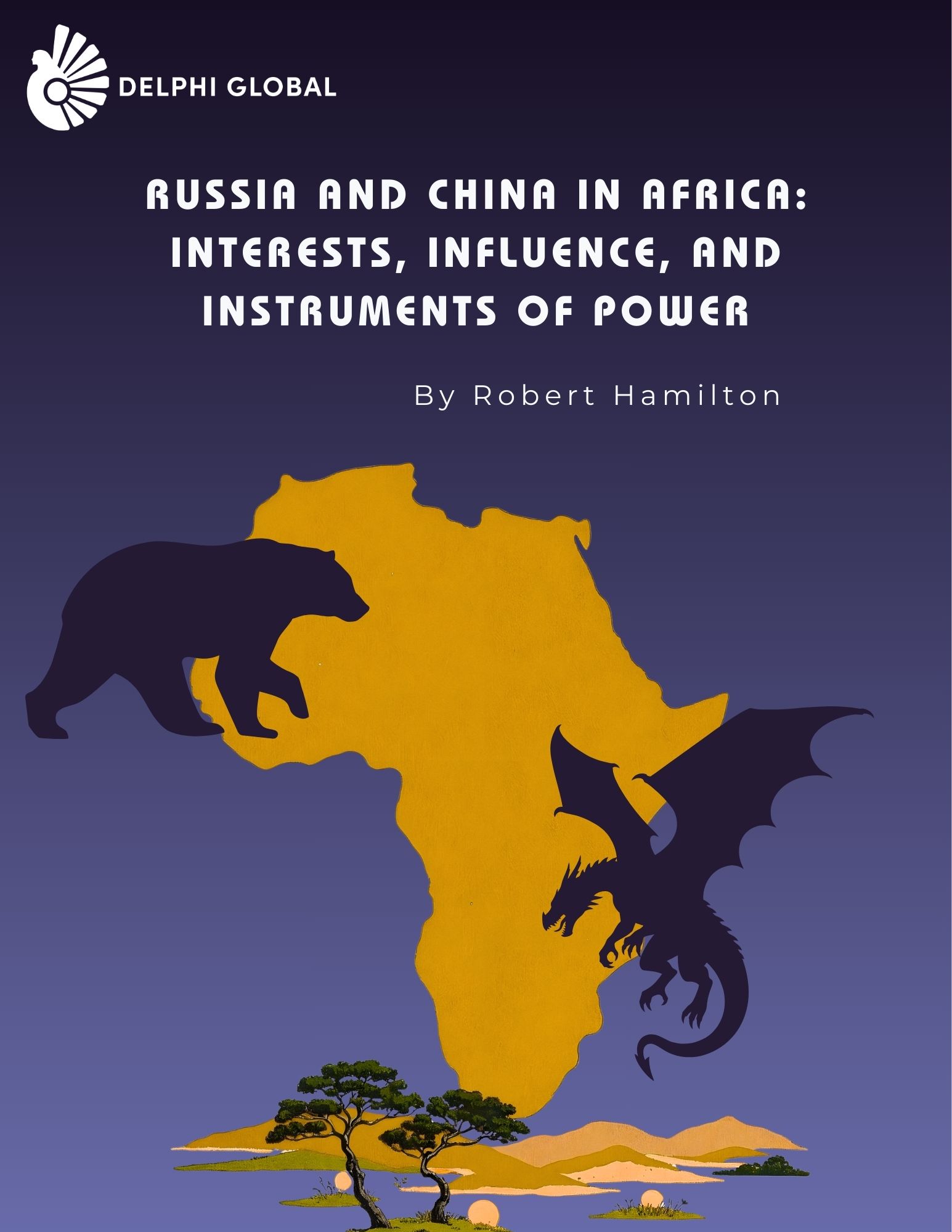
This report, the first in a series of four, examines Russian and Chinese presence and interaction in Africa. To do so, it first defines the interests of each in Africa; it then gives an overview of their sources of influence on the continent; and then moves to a brief examination of how each uses the instruments of power - diplomatic, informational, military, and economic - to advance their interests. It concludes by examining how and where Russian and Chinese interests are most and least aligned. Click here to watch the event recording: https://youtu.be/IEYs67aVDhA?si=67zN-G4SgE2qyiDg
Thursday, June 11, 10am ET. Via Zoom. This report, third in a series of four reports on Russia-China interests in Africa, argues that although China and Russia are frequently grouped together in Western strategic thinking, their roles, objectives, and methods in Africa differ fundamentally. China is primarily a structural economic power whose influence derives from trade, development finance, infrastructure, and resource extraction, while Russia operates as a disruptive geopolitical actor leveraging insecurity, military assistance, and political instability for strategic gain. Together, however, both powers are reshaping Africa’s political economy and altering the strategic environment confronting the United States and Europe.
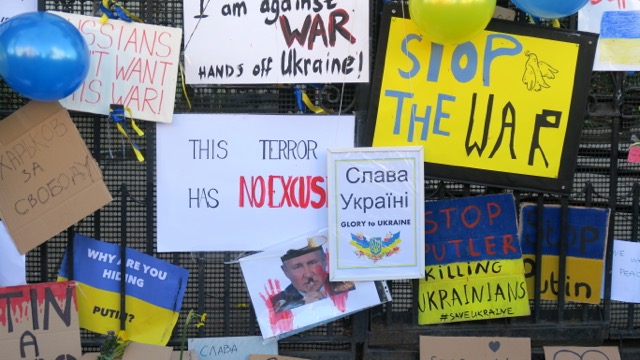
Join us via Zoom on Tuesday, May 19, at 10am ET. As year five of Russia's war in Ukraine drags on, what is the current status of the conflict and is it still possible to defeat Russia? The panelists will assess the battlefield balance, Russia’s political and military constraints, Ukraine’s leverage, Western support, sanctions, NATO’s role, and the question of credible security guarantees.
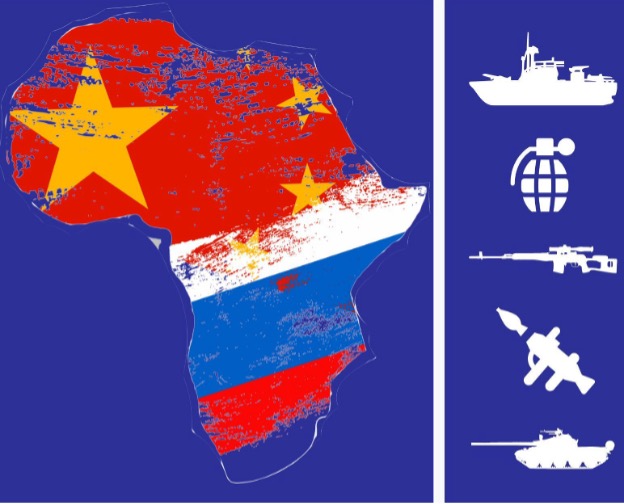
Join us via Zoom on Wednesday, April 8, 10am ET. This report discusses how China and Russia pursue structurally different approaches to Africa, rooted in competing theories of power projection. China seeks to embed influence through institutions. Its engagement prioritizes stability, governance cooperation, infrastructure development, professional military relationships, and long-horizon information investment designed to generate alignment that persists beyond individual leaders or crises. Russia, by contrast, exports outcomes rather than systems. Moscow’s model relies on regime protection, security contracting, political disruption, and information operations that generate immediate leverage but rarely produce durable institutional influence. Where China operates best in environments capable of sustaining long-term investment, Russia often thrives in conditions of political fragility and insecurity.
Join us for a full-day in-person conference Wednesday, on April 22, 2026. Event Partners: Delphi Global Research Center. Foundation Institute for Eastern Studies, Poland. American University, School of International Service Registration begins at 8:30am. Opening Remarks at 9am. Conference ends at 5:30pm. Russia’s war against Ukraine has accelerated a broader shift in the Euro-Atlantic security environment - one defined by sustained high-intensity conflict on Europe’s borders, rising risks of escalation, and an increasingly contested strategic order. At the same time, Moscow’s pressure campaign extends well beyond the battlefield through cyber operations, disinformation, sabotage, coercive energy and economic tools, and efforts to weaken democratic cohesion and alliance unity. For the United States, Europe, and NATO, the central challenge is no longer episodic crisis management, but maintaining credible deterrence and long-term staying power amid competing global priorities, political constraints, and finite defense-industrial capacity. This conference will focus on translating strategic urgency and seek practical answers: how to sustain meaningful support for Ukraine while defining realistic objectives and pathways toward a durable peace; how to blunt hybrid threats below the threshold of war and harden societal and infrastructure resilience; how US foreign policy choices shape transatlantic burden-sharing and strategic coherence; and how NATO must adapt its posture, readiness, and decision-making for a more dangerous decade. A core emphasis is rearmament and the transatlantic defense industrial base—procurement reform, production scale, interoperability, and supply-chain resilience—because deterrence ultimately rests on the ability to generate capabilities at speed and sustain them over time.
Join us on Thursday, March 19, 2026 at 12pm Eastern. The West’s handling of Russia’s notorious frozen assets is historically unprecedented, not least due to the amount of money involved. A central challenge is how third-party states, in this case the US, Canada, Japan, the UK, and the EU, can utilize these funds without violating Russia’s sovereign immunity afforded in international law. This report examines initially the state of the frozen funds and then turns to how the G7 partners have managed to do so – namely by examining their utilization of the interest earned on Russia’s frozen assets. This underpins the Extraordinary Revenue Acceleration (ERA) loans program for Ukraine, representing the largest wartime sovereign-to-sovereign financing since World War II. The initiative channels up to US$50 billion to Ukraine, and its structure shields Ukraine from repayment liability.
Report Launch: "Russia and China in Africa: Interests, Influence, and Instruments of Power"
This report, the first in a series of four, examines Russian and Chinese presence and interaction in Africa. To do so, it first defines the interests of each in Africa; it then gives an overview of their sources of influence on the continent; and then moves to a brief examination of how each uses the instruments of power - diplomatic, informational, military, and economic - to advance their interests. It concludes by examining how and where Russian and Chinese interests are most and least aligned.