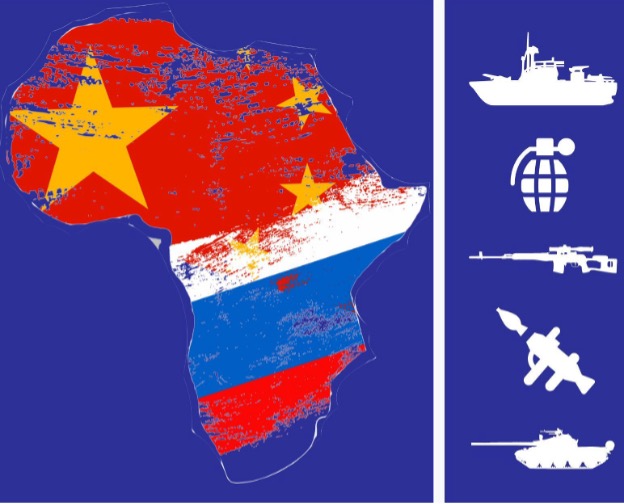

Shaping the Security Landscape: How Russia and China Approach the Issue of Security in Africa
China and Russia have increasingly been grouped together as revisionist powers interested and intent on expanding influence across Africa. Both challenge Western political influence, cultivate relationships with authoritarian governments, and present themselves as alternatives to Western partnership models.
Yet treating Beijing and Moscow as operating from a shared strategic playbook obscures more than it reveals. Beneath rhetorical alignment and occasional diplomatic coordination lies a fundamental divergence in how each power understands influence, security cooperation, and long-term political engagement on the continent.
Below, we discuss how China and Russia pursue structurally different approaches to Africa rooted in competing theories of power projection. China seeks to embed influence through institutions. Its engagement prioritizes stability, governance cooperation, infrastructure development, professional military relationships, and long-horizon information investment designed to generate alignment that persists beyond individual leaders or crises. Russia, by contrast, exports outcomes rather than systems. Moscow’s model relies on regime protection, security contracting, political disruption, and information operations that generate immediate leverage but rarely produce durable institutional influence. Where China operates best in environments capable of sustaining long-term investment, Russia often thrives in conditions of political fragility and insecurity.
China’s Africa Approach
China maintains a blended approach to African security policy that includes transactional and statebuilding components, yet the overall approach mirrors American and Western policies more than Russian ones. China prefers to operate in a cooperative environment that fosters security, allowing its economic operations to proceed at speed and laying the groundwork for a Chinese version of the Western rules-based order. On the other hand, Russia prefers to operate within and benefit from chaos, which ultimately hinders its long-term strategies in Africa.
China’s African security policy can be broken down into three categories: transactional approaches, state-building operations, and international security operations (including counterterrorism, counter-piracy, etc.). While many activities span these three categories, such as private security companies and port facilities construction, we have attempted to silo them for ease of understanding and to illustrate China’s broader strategic vision for the continent.
Chinese strategic documents provide a mix of political theater and actual signaling for the Chinese policy community, allies, and enemies. The 2025 Defense White Paper provides a strong encapsulation of the twin-drivers of governance and transactionalism that guide the Chinese state and military’s view of the world. In terms of governance, the Paper notes that “All countries are now aboard the same ship with a shared destiny. No country can retreat to self-isolation. Solidarity, coexistence, and mutual flourishing are the only viable path for humanity.”[1] However, the writers note that “key core technologies remain subject to foreign control,” while also noting that “Chinese overseas institutions, projects, and personnel face real and growing security risks.”[2] These quotes point to the transactional and international security aspects of Chinese operations abroad. In Africa specifically, the paper denotes China’s role in addressing Africa’s “historical injustices,” presumably a reference to colonization by the West, China’s large international peacekeeping force, along with support for independence, peace, and cybersecurity.[3]
Earlier defense white papers spell out China’s other priorities. The 2019 Defense White paper spelled out China’s interest in hosting exchanges and fora for military officers, particularly mid-and-junior level officers, with a focus on cooperation and mutual assistance.[4] Meanwhile, China’s 2015 Military Strategy noted the “traditional friendly military ties” with African partners and the spirit of “neighborhood diplomacy of friendship, sincerity, reciprocity, and inclusiveness.”[5]
While Chinese strategy documents focus on the mutual benefits of its security partnerships in Africa, the reality is more complicated. In particular, China pursues transactional approaches, much as Russia, Turkey, the UAE, the United States, and others do in Africa, including in the military arena. These transactional approaches span from weapons and equipment sales to ports and military bases. However, it's important to note that Chinese transactional investment on the continent tends to favor stability over chaos, unlike the Russian model.
Port access continues to be a critical element of China’s foreign policy worldwide, and Africa is no exception. This approach reflects a broader Chinese maritime security focus, as China has assisted African partners with patrol vessels, surveillance, and training activities, particularly along Africa’s vulnerable waterways such as the Gulf of Guinea and the Red Sea.[6] Much like Russia, China's interest in port facilities along the continent reflects a military basing strategy similar to the American power-projection strategy, alongside its British (and French) forebearers. While Russia often seeks to connect its deployments to military operations, such as those in Libya, Sudan, or Syria, China has a history of developing existing commercial ports to act as military facilities, as could be seen in its construction of Djibouti’s Doraleh Port, despite claims that the port would be a commercial enterprise only in 2017. However, this project has also put future Chinese port development activities in limbo, particularly as African states fear the political implications of housing a foreign military base.[7] In general, though, it is clear that China and Russia both pursue port facilities to establish strategically valuable basing along Africa’s waterways.
Chinese and Russian military-industrial complexes also pursue similar policies in their African trading schemes. Both aim to support a broad range of allies–from regimes like the West African juntas fighting jihadist organizations to counter-government forces like the Rapid Support Forces (RSF) in Sudan. Ultimately, both Russian and Chinese defense industrial bases aim to partner with any and all outside organizations in order to generate profits. According to both the Africa Defense Forum and the International Institute for Strategic Studies, China has recently passed Russia as the largest weapons exporter to the African continent. China’s state arms manufacturer, Norinco, recently opened an office in Senegal to reinforce regional access to arms, alongside existing offices in Angola, South Africa, and Nigeria.[8] Chinese sales include armored vehicles to the Malian regime used by Africa Corps in its defeat at Tinzouatene, and drone systems such as the Cai Hong model 4 sent to Nigeria and the Democratic Republic of the Congo.[9] However, China’s approach could backfire in other areas of its security policy, particularly in the statebuilding arena. Chinese howitzers and precision munitions were used by the RSF in Sudan in violation of arms embargoes on the country, which Amnesty International claims were supplied by the United Arab Emirates–in some cases, these weapons were directly tied to strikes that killed civilians.[10] This type of approach leaves China open to accusations of war crimes by association, which could be particularly problematic while attempting to build long-term relationships in Africa.
While Russia has invested heavily in private military companies and public-private military partnerships in Africa, including Wagner Group and Africa Corps, respectively, China has taken a more cautious approach to such activities. Russian PMCs are well-known, including Wagner Group and Africa Corps, for their involvement in military training and counter-insurgency activities, their frequent war crimes, and their connection to extractive industries like forestry and gold mining. Unlike Russia’s approach, which has yielded some material wealth alongside significant notoriety, China prefers to operate in the shadows in the private security sector. This reflects China’s relative disinterest in mercenary operations, particularly as they threaten Beijing’s control over military operations. Like Russia, China maintains legal strictures against mercenarism, in particular banning Private Military Companies (PMCs). Unlike Russia, China enforces restrictions on PMCs, while Russia has a history of denying the existence of PMC operations, including Wagner Group, Konvoy, and other operators, to maintain plausible deniability and keep mercenary groups in line with the threat of criminal prosecution. Instead, Beijing prefers to employ and utilize Private Security Companies (PSCs), that offer company-to-company security services, rather than state security assistance programs. Such programs include personal security and site protection, rather than military training, combat, and coup-proofing activities that PMCs carry out. However, these companies are severely limited in their ability to conduct military activities. For example, Hua Xin Zhong An is one of the first Chinese PSCs authorized to carry small arms in protection details for VIPs transiting African waters. Another company, Beijing DeWe Security Service, employs 2,000 contractors to guard Ethiopian and Kenyan infrastructure and resource extraction projects, and has a history of successful operations, including the evacuation of 300 Chinese oil workers during the 2016 South Sudanese civil war. Further, Chinese companies do not face the same business conditions as Russia–for instance, Russian PMCs can attract many ex-military members seeking higher pay for dangerous work abroad, while Chinese PSCs are aiming to cut costs.[11]
However, Chinese PSCs may have to evolve more rapidly in the future, particularly as Chinese businesses continue to face unfavorable relationships with African governments. In particular, Chinese companies have faced a wave of challenges stemming from their problematic business activities, including environmental degradation and dangerous working conditions. In the Central African Republic (CAR), Chinese gold mining businesses have relied on local armed groups opposed to the government for security, which may have contributed to a May 2024 attack that killed four workers at a Chinese mining site. In response, the Chinese embassy in CAR responded by warning citizens pursuing a “gold rush” in CAR to avoid becoming “mining slaves” by giving up their legal documents in exchange for working rights.[12] In Ghana, local military captured three Chinese nationals, equipped with excavators and banned shotguns, conducting destructive and illegal mining activities along the Ankobrah River in January 2026.[13] In Zambia and Nigeria, Chinese companies have been accused of a variety of environmental and social crimes, including the flooding of a Zambezi river tributary with metal sludge after a waste dam at a copper mining facility collapsed and the employment of children to mine lithium for less than $1 per day.[14] Last, China’s deep exploitation of the critical minerals in the eastern part of the Democratic Republic of the Congo (DRC) is well known, fueling the ongoing violence and instability between the DRC and its neighbors, particularly Rwanda.[15] While Chinese companies have wielded significant economic and political power across a variety of African states, their ability to maintain these extractive structures rests on corrupt agreements with local power players, while Chinese PSCs play a limited role in the extractives sphere. As violence and instability increase across the region, particularly as jihadist organizations continue to expand in West Africa, the Chinese government may need to reevaluate these relationships, determining the extent to which Chinese PSCs can adequately protect Chinese companies, if at all, and whether Chinese military or PMC options would be better suited for these operations.
Taken together, Chinese transactional approaches appear similar to the Russian model. Both parties use arms sales and resource extraction as avenues for state economic advancement. Unsurprisingly, this has led to competition between the two players, with Russia’s Wagner Group being accused of attacking Chinese miners in CAR.[16] This suggests a relatively low level of exploitative competition between Chinese and Russian businesses in Africa, which could expand to other countries in the future. However, China and Russia also tend to focus on port facility access and ownership as critical elements of their foreign policy strategies. While China has secured Djibouti and Russia continues activities in Sudan, Madagascar, Libya, and elsewhere, the two countries have yet to engage head-to-head along Africa’s strategic waterways, although this could occur in places like Equatorial Guinea, where China plans to build naval facilities, and Russia provides security assistance.[17] Further, there are a finite number of African ports along critical shipping lanes, so it is likely a question of when rather than if China and Russia will directly compete for port access and control. Elsewhere, Russia and China are engaged in competition on the arms market, with one South African industry executive suggesting that the two powers “‘don’t like each other, they are here to counter each other.”[18] Still, Russian and Chinese companies would need to invest significantly more heavily to truly compete in Africa.
Statebuilding: How Russia Perceives China in Africa
Moscow's public position on Chinese activity in Africa may best be defined as a balancing act. In a February 2023 official statement, Russian Deputy Foreign Minister Mikhail Bogdanov characterized the relationship as "fair competition,” taking care to distinguish both countries' approaches from what he labeled Western "neo-colonial" practices.[19] By accepting competition but subordinating it to a shared anti-Western narrative, Moscow has broached its relationship with China cautiously. In short, Russia has strong incentives to avoid signaling alarm at China's dominance or acknowledging rivalry with a partner on whom it increasingly depends. Any ruptures with China in Africa may seem inconsequential, but they can create conditions that threaten Moscow’s relationship with Beijing on issues far more critical to Putin.
The public diplomatic posture that Russia has adopted is reinforced at the summit level. The joint Putin-Xi declaration of February 2022 (the so-called "No Limits" partnership) committed both powers to a strategic alignment that nominally encompasses their African engagements. Putin's programmatic article ahead of the Second Russia-Africa Summit in July 2023, as well as the Summit's official declaration, invoked the language of a "multipolar world order," a framing that aligns Russian and Chinese rhetorical objectives while staking out Russia's independent leadership role in Africa. Yet, while the public record illustrates a concerted effort to present a picture of harmony and strategic vision, the operational record is considerably messier.
Beneath the diplomatic language, Russian analysts and officials broadly understand that Russia cannot match China's economic presence in Africa. China maintains embassies in all 54 African states. Meanwhile, in 2023, Russia had diplomatic presence in just 39.[20] But over the past few years, Moscow has been on the offensive. In January 2026, Sergey Lavrov announced that the number of Russian embassies on the continent would soon hit 49.[21] States like Niger, Sierra Leone, and South Sudan each saw Russia open diplomatic posts in 2025, and Moscow seems intent on expanding its diplomatic footprint–a benchmark it undoubtedly sees as meaningful to its claims as a great power.
Efforts to catch China (and the U.S.) in terms of diplomatic posts aside, Moscow offers very little in terms of economic engagement with the continent, and certainly cannot compete with Beijing. China's trade with Africa reached roughly $300 billion in 2025; Russia's was approximately $25 billion, concentrated in arms sales, fertilizers, and grain. China has committed hundreds of billions of dollars to Belt and Road Initiative infrastructure investment across the continent; Russia’s economic footprint, by contrast, is defined largely by extractive concessions and military-commercial arrangements tied to security assistance deployments. Russia’s one comparative advantage may lie in nuclear energy outreach. Moscow has signed civilian nuclear cooperation agreements with nearly twenty African states, including recently inked memorandums of understanding with Niger, Burkina Faso, and Mali.[22]
Nuclear cooperation offers Russia a rare avenue for long-term influence. Through Rosatom, Moscow provides integrated packages that include reactor construction, financing, fuel supply, training, and long-term servicing arrangements that can bind partner states into decades-long technical relationships. For several African states, Russian nuclear cooperation presents an appealing alternative to Western financing conditions or Chinese infrastructure lending. While Russia cannot compete with China in trade or infrastructure investment, nuclear partnerships enable it to present itself as a provider of high-end strategic technology rather than merely a security contractor or commodity exporter.
However, there are limits to Russia’s nuclear ambitions with many agreements never making past the memorandum phase. This reflects a confluence of challenges, from high capital costs and regulatory barriers to governance challenges in partner states. Russia also has its own fiscal pressures and the influence that nuclear cooperation produces is slow compared to the immediate political effects generated by regime-security assistance–even if this influence is less durable. As a result, Russia’s nuclear outreach functions less as a comprehensive economic alternative to China than as a narrow strategy compensating for broader weaknesses in trade and investment engagement. These structural limitations help explain Moscow’s broader approach to China’s expanding role on the continent. Unable to compete economically or institutionally, Russia has strong incentives to avoid framing African engagement as a direct arena of rivalry.
Some have described the relationship as a "competitive partnership" in which Russia cannot match China economically and therefore does not yet constitute a threat that Beijing feels compelled to address.[23] But Russia does not publicly frame the relationship as competitive precisely because doing so would highlight its own weakness. Strategic acceptance of its economic disadvantage serves as a form of strategic communication. Moscow signals to Beijing that it is not a threat, preserving a bilateral relationship that Moscow relies on.
The same calculus shapes Russia's targeting logic in Africa. Prior to 2022, Russia deliberately concentrated its engagement on countries the West and China had largely overlooked, deemed too complex, or saw as an opportunity to exploit. These included fragile states, conflict zones, and governments under international pressure where Russian security services could offer something no other external actor was providing.[24] This gap-filling strategy reflects both resource constraints and a recognition that competing directly with Chinese-backed development programs is neither pragmatic nor viable. Russia prefers to operate within and benefit from chaos, whereas China’s model prefers, if not necessitates, stability. That divergence in operating-environment preferences has, until recently, kept the two powers largely out of each other's way.
Post-2022 Dependency and Its Constraints
Russia's February 2022 invasion of Ukraine fundamentally altered the terms of its relationship with Beijing—including its freedom of maneuver in Africa. Facing comprehensive Western sanctions, Russia became heavily reliant on Chinese trade, dual-use technology transfers, and diplomatic cover at the UN Security Council. That dependency has direct consequences for how Moscow handles its relationships with Africa. In short, Russia cannot afford open friction with Beijing even when Chinese economic interests and Russian security operations are in direct tension.[25]
Recent scholarly assessments suggest that the gap between rhetorical alignment and actual coordination in Africa is wide and growing.[26] Open source reporting suggests that Moscow and Beijing do not share intelligence, coordinate operations, or align their engagement calendars—though a recent trilateral naval exercise with South Africa in January 2026 is a notable exception.[27] Generally speaking, their African partnerships are managed bilaterally rather than jointly, and there are few indications that this will change in the near term. The purported "No Limits" framing, in short, has limits. It functions primarily as a diplomatic instrument—useful for presenting a unified front against Western pressure, but not a meaningful operational framework.
Growing Private Concern
Despite the official "fair competition" framing, there is growing evidence that Russia views China's expanding diplomatic profile in Africa with some private unease. And vice versa. Reporting increasingly documents Russian concern that China is displacing Moscow’s influence in countries where Russia has historically enjoyed privileged political or security relationships. China’s Global Security Initiative (GSI), for example, establishes institutional frameworks that African governments find attractive while positioning Beijing as a governance partner in areas such as security cooperation and conflict mediation, domains where Moscow once held a comparative advantage.
For Russia, managing this dynamic requires an increasingly delicate balancing act. Moscow depends on diplomatic and economic support from Beijing while simultaneously seeking to preserve its own claims to relevance as an independent great power actor in Africa. This creates strong incentives to sustain rhetorical alignment even as underlying competition grows. The result is what one research team has described as an “ambiguity alliance,” nominally united in opposition to Western influence but lacking meaningful strategic coordination, with both sides tacitly avoiding public acknowledgment of their diverging interests.[28]
Implications for U.S. Strategy
Russia's perception of China in Africa matters for U.S. strategy for at least three reasons. First, the Russia-China relationship in Africa is not a unified adversarial bloc—it is a marriage of convenience with structural fault lines. Engagement strategies that exploit diverging interests may generate more leverage than treating Moscow and Beijing as a single strategic problem. Second, Moscow's value proposition as an actor willing to step in and fill gaps for regimes that have broken relations with the West means that U.S. disengagement from fragile states creates the exact conditions—ungoverned political space, security vacuums, institutional weakness—that Russian influence requires and continuously relies on. Third, Russia's growing dependency on China is itself an indicator: where Chinese and Russian interests openly diverge in Africa, the stress fractures in the broader Russia-China partnership will be visible first.
State Building Approaches: The Builder vs. the Extractor
Transactional approaches reveal the surface-level similarities between Chinese and Russian engagement in Africa. Both use arms sales, resource extraction, and port access as instruments of state advancement, but it is their approach to state building where the two approaches diverge most visibly. Beijing’s approach aims to cultivate an enduring relationship with African partners: a layered network of military institutions, training relationships, governance norms, peacekeeping contributions, and information architectures designed to embed African states within a Chinese-centered international order. Russia, meanwhile, is constructing a network of partners tethered by promises of security assistance, but in reality is building almost nothing. This reflects a fundamentally different approach to time horizons and strategic objectives.
China's long-term economic and political interests require functional, if pliable, African state institutions. Stable environments are a prerequisite for infrastructure investment, resource access, and durable political alignment. Though China has taken on risky ventures in places like the Democratic Republic of the Congo and Mali, it much prefers a stable, relatively ‘high-yield’ environment for state investments over the medium-to-long term. Russia's shorter-horizon priorities—securing UN votes for its Ukraine position, generating revenue to support its economic portfolio, and providing regime protection as a commercial service—do not require African state capacity. They require African state dependency.
Russia's State Building Gap
Russia's disengagement from state building is a structural feature of its Africa model, not simply a capacity shortfall. The Wagner Group and its successor, Africa Corps, provide regime protection and counter-insurgency as commercial services; they do not build military academies or develop professional military education programs.[29] This is a fundamental departure from both the Soviet Cold War model and China's current approach.
This divergence is the result of several factors. First Russia's military is heavily committed to Ukraine, and resources available for Africa have contracted since 2022. Genuine capacity-building requires sustained personnel investment and institutional infrastructure that Russia cannot currently provide at scale.[30] Second, and more structurally important, dependent, fragile regimes are more valuable clients for the Russian model than capable states. A government unable to defend itself requires Russian security services continuously; a government that develops indigenous capability provides only a one-time transaction. This creates a deliberate disincentive for genuine institution-building. Third, and perhaps most damning for Russia's long-term prospects, are accounts from Russian personnel themselves. Malian military officers have accused Russia's forces of ignoring chains of command, commandeering vehicles, and treating African partners with "open racism"—a pattern that researchers have attributed as a primary driver of Wagner's operational failure in Mali.[31]This attitudinal dimension may explain why Russia struggles to replicate even a pale version of the Cold War Soviet statebuilding model in contexts where resources are nominally available.
Russia seems particularly uninterested in training the officer corps of African states—a key departure from Soviet-era policy. The USSR built African military institutions as a vehicle for long-term ideological alignment. Today, Russia extracts from African states rather than investing in them. The implication is that Russian influence, while disruptive and durable in the short term, lacks the institutional infrastructure to survive as client regimes change, as they inevitably do. As Wagner's catastrophic defeat at Tinzouatene in July 2024 demonstrated, Russian security guarantees are conditional, and the political costs of Russian partnership—war crimes exposure, international isolation, and association with documented atrocities—will continue to rise. African governments are beginning to calculate those costs more carefully.
The Information Environment: CGTN vs. RT
The contrast between Chinese and Russian information operations in Africa maps directly onto the broader statebuilding distinction. In the Wagner era, Russia's disinformation model was highly decentralized, low-cost, and designed to destroy rather than construct. Troll farms, local influencer networks, and RT/Sputnik amplification were optimized for eroding trust in Western institutions and destabilizing target governments, not for building durable pro-Russia sentiment.[32] In Nigeria and across the Sahel, Russian information operations have concentrated on amplifying anti-Western narratives and exploiting pre-existing grievances. The content Russia's forces produce and share among themselves—documented extensively in private Telegram channels where posts are, in the words of one investigative account, "laced with racism"—reflects a worldview that is fundamentally incompatible with the kind of partnership Africa's governments are seeking.[33]
China's information model operates on entirely different logic. CGTN (China Global Television Network) is state-directed, capital-intensive, and long-term oriented. China is focused on establishing itself as a responsible development partner, a fellow victim of Western colonialism, and a viable governance model.[34] Chinese information investment in Africa includes direct media infrastructure—CGTN bureaus, journalist training programs, and Chinese-funded content partnerships—that create editorial dependencies which persist independently of active Chinese intervention. African journalists trained in Chinese programs, working in Chinese-funded newsrooms, and covering Chinese-framed development stories generate alignment that is self-reinforcing over time.
The divergence in approaches to information operations is important for at least two reasons. First, the Russian state has effectively absorbed and institutionalized Wagner’s disinformation business model, scaling influence operations through official and semi-official channels such as Russia Houses and state-sponsored cultural programming. These institutions combine scholarships, media engagement, and journalist training with messaging that promotes Russia as an anti-imperial partner while portraying Western engagement as exploitative or destabilizing. The result is an expanding informational ecosystem that blends cultural diplomacy with political manipulation
Second, Russia’s approach to disinformation prioritizes short-term political effects over long-term reputational investment. While highly effective at mobilizing anti-Western sentiment and insulating partner regimes from external criticism, this model struggles to generate durable societal legitimacy. Russian influence, therefore, remains contingent on crisis conditions, elite insecurity, and continued informational confrontation. China, by contrast, seeks informational dependence rooted in institutional presence and developmental narratives. Where Beijing builds media ecosystems designed to endure, Moscow constructs informational advantage during moments of political instability.
These competing models reveal distinct pathways of authoritarian influence. China’s strategy aims at gradual alignment through institutional integration and narrative normalization. Russia’s strategy seeks immediate geopolitical leverage through disruption and distrust. Both challenge Western influence in Africa, but they do so through fundamentally different understandings of how information power translates into political influence.
Understanding Russian and Chinese Counterterrorism Approaches in Africa
The Threat Landscape
For the past several years, sub-Saharan Africa has been the epicenter of jihadist terrorism. Data from the Global Terrorism Index (GTI) shows that of the top ten countries affected by terrorism (measured by incidents, fatalities, injuries, and hostages) six are located in sub-Saharan Africa: Burkina Faso (1), Mali (4), Niger (5), Nigeria (6), Somalia (7), and Cameroon (10).[35] When the data is extended to the top 25 countries, others that make the list include the Democratic Republic of Congo (DRC) (12), Mozambique (17), Kenya (19), Chad (23), and Togo (24). Two of al-Qaeda's most active branches—al-Shabaab and Jama'at Nusrat al-Islami wal-Muslimin (JNIM)—continue to terrorize the Horn of Africa and the Sahel, respectively. And the Islamic State maintains myriad franchise groups, including distinct affiliates in the Sahel, Lake Chad Basin, Mozambique, DRC, and Somalia.[36] Large parts of the continent are plagued by failed states and ungoverned spaces, porous borders, weak governance, warlordism, and high levels of corruption.[37] It is in this operating environment that Russian and Chinese security forces must maneuver and adjust their force posture appropriately.
Russian Approaches to Security in Africa
Russia's approach to security in Africa has primarily focused on providing coup-proofing for junta regimes in the Sahel, including Burkina Faso, Niger, and Mali. Russian mercenaries have also been active in CAR, Madagascar, Libya, and Sudan, at various points.[38] Moscow's activities have included counterinsurgency and counterterrorism missions, disinformation campaigns, training and advising host-nation forces, and providing security for political elites. Russia's approach has been part kinetic, part non-kinetic, with roughly half of all disinformation campaigns in West Africa perpetrated by the Russians.[39] Moscow capitalized on anti-French and anti-American sentiment to spread its influence in sub-Saharan Africa, although the results of its counterterrorism and counterinsurgency campaigns have been far less effective than the host nations expected.
After Prigozhin's attempted mutiny, the Kremlin tightened its reins on Russian mercenary activity and reorganized the Wagner Group into the Africa Corps. Wagner forces departed Mali in June 2025 after three and a half years of fighting, although a residual deployment of Africa Corps mercenaries remains in the country.[40] The transition from Wagner Group to Africa Corps is unlikely to result in significant changes to tactics, techniques, or procedures, and the only notable difference so far has been a shift toward more modest operations and a scaled-back mission.[41]
Whereas China's approach to security in Africa is subtle, the Russian approach has been heavy-handed and draconian, leading to large numbers of civilians being killed, often in a brutal manner. In many ways, this has created a self-fulfilling prophecy that benefits Moscow. Russian private military companies are invited into African countries to help stabilize the regime, conduct operations to ostensibly protect the host-nation leadership, but the scorched earth approach begets further instability, which Russia then argues it can help reduce. Overall, Russian mercenaries in Africa have exacerbated the terrorism problem, pushing local civilians into the arms of jihadist groups, including JNIM. [42]
Not only has Russia's counterterrorism approach helped jihadist groups recruit, but there have also been several instances where Russian forces have suffered significant losses at the hands of terrorist groups, not exactly an attractive advertisement for the Kremlin's security cooperation activities. In July 2024, Wagner fighters were defeated by al-Qaeda militants and Tuareg separatists in northern Mali, leading to significant casualties for Wagner and sullying its image as an effective counterinsurgency force.[43]
Moscow's security assistance comes with "no strings attached," primarily because Russia cares little about the countries its forces operate in—the objective is more often than not to gain access to rare-earth minerals, mining rights, or critical infrastructure such as ports.[44] Still, the lackluster performance of Russian mercenaries has done little to reinforce Moscow's brand in Africa, and in the near future, could open the door for alternative arrangements with other countries, including China, as Beijing's footprint continues to expand in Africa and, in turn, so does its need to provide private security to its personnel, assets, and infrastructure.
Chinese Approaches to Security in Africa
China's approach to security in Africa has been less overt than Russia's, focusing primarily on state-centric capacity building, protecting vital economic corridors, and working within existing United Nations frameworks. China's primary objectives are to protect its citizens and assets across Africa, to stabilize partner governments, and to maintain the integrity of logistical routes that underpin its Belt and Road Initiative, Beijing's chief foreign policy project.[45] At the same time, China has remained wary of a visible security footprint, opting instead for a more discreet presence intended to avoid backlash. But as China's role in the world continues to grow and its presence expands, it may be forced to establish a more visible presence to enhance its deterrent capabilities, while also trying to avoid becoming a target for terrorists, insurgents, and militias in the areas where it operates.
Throughout Africa, Chinese interests have been targeted by jihadist groups, but to date, those attacks have been linked to al-Qaeda affiliates, including al-Shabaab, al-Qaeda in the Islamic Maghreb (AQIM), and JNIM. These attacks have resulted in the death of Chinese nationals in some cases or the destruction of Chinese-linked infrastructure and construction projects. And while Islamic State affiliates have yet to claim attacks against Chinese interests in Africa, given Beijing’s growing presence on the continent, it seems like it could only be a matter of time before that occurs, whether in the Democratic Republic of Congo, Mali, Mozambique, or elsewhere.
In March 2023, nine Chinese mine workers were killed in the Central African Republic (CAR). To this day, it remains unclear who was responsible for the killings.[46] Putting attribution aside, the incident raises questions about whether Chinese private security contractors operating abroad should be better trained and equipped. Unlike their Russian counterparts, Chinese PSCs are often unarmed and work through local security companies or even local militia groups.[47] Because many Chinese PSCs are unarmed and work in almost a liaison role, it has allowed them to avoid scrutiny. There are some PSCs that have been cleared to carry weapons, including Hua Xin Zhong An, a maritime security company; the Haiwei Group, tasked with providing security to construction companies operating in East Africa; and Beijing DeWe Security Services, responsible for protecting rail and other infrastructure projects.[48]
Elsewhere, China will likely need to grapple with terrorist threats affecting Chinese businesses, much as insecurity, environmental issues, and other threats will continue affecting Chinese investments across the continent. In Niger, attacks on the Agadem-Sèmè-Kpodji pipeline, owned by two Chinese companies, China National Petroleum Corporation (CNPC) and West African Oil Pipeline Company (WAPCO), have been carried out by the Mouvement Patriotique pour la Liberté et la Justice (MPLJ), an armed group associated with ex-president Mohamed Bazoum. According to members of the MPLJ, the attacks reflect the group’s interest in benefitting from oil extracted from their own territory, and Chinese companies in the region have declined to employ locals nor supplied promised funds intended for local government and infrastructure.[49] As argued above, Chinese companies will be forced to reckon with increasing demands from local partners, particularly as resource nationalism sweeps the continent. China remains poorly prepared to deploy its own forces or PMSCs to guard its economic projects, leading to continued attacks that often go unpunished.
Beijing's counterterrorism strategy in Africa is based in part on the Global Security Initiative (GSI), first introduced in 2022 as an alternative framework to Western counterterrorism efforts. China framed the GSI in terms that Beijing knew would resonate with African states and broader swaths of the Global South—cooperative security, non-interference, and the defense of the United Nations Charter.[50] China's September 2024 Summit of the Forum on China-Africa Cooperation (FOCAC) saw Chinese President Xi Jinping pledge approximately $140 million in military assistance to African partners, along with training for thousands of military personnel, police, and law enforcement officers.[51] China has also engaged in military drills with African countries, including tactical counterterrorism exercises with Mozambique and Tanzania in 2024.[52]
China's most visible security presence is its military assets at its base in Djibouti, near the Gulf of Aden, where the People's Liberation Army Navy (PLAN) has been conducting counter-piracy operations since 2008.[53] China also maintains a vast peacekeeping presence in Africa, with approximately 1,400 troops deployed in United Nations peacekeeping operations.[54]
Chinese strategic documents point to the importance of Chinese peacekeeping activities for its image in Africa and worldwide. The Chinese 2025 Defense White Paper points to a cumulative deployment of 50,000 Chinese peacekeepers worldwide. Further, the Chinese state points to the sacrifices made by these peacekeepers, noting that 25 have died in the line of duty.[55] These deployments, however, also provide other key perks for Beijing. Some deployments, including the Chinese UN peacekeeping contingent in South Sudan, support recent Chinese investment, including CNPC oil extraction sites and pipelines. Meanwhile, China also uses these deployments to provide troops with deployment experience and new skills.[56] Thus, beyond the soft-power benefits of peacekeeping, China can also provide some resource protection and upskill its military through African deployments.
Conclusions
Russian and Chinese policies toward Africa hinge on significantly different approaches to the continent. China's state-building activities in Africa, military-to-military exchanges, peacekeeping deployments, police training, GSI governance export, and long-horizon information operations, reflect a coherent strategic design. Beijing is committed to embedding African states within a Chinese-centered international order that is institutionally resilient. Russia is exporting outcomes like regime survival, electoral disruption, and controlled instability without an underlying nor durable model. China is exporting a model that, once adopted, generates alignment independently of continuous Chinese intervention. Africa subject-matter expert Jason Warner succinctly captures the differences between the Russian and Chinese approaches, noting that "Where Russia's African military strategy is brash, violence-centric and chaotic, China's is quiet, nonviolent, boringly technical, and profoundly, delicately measured."[57]
This distinction between enduring institutional influence and short-term strategic opportunism is the defining feature of the two powers' competition in Africa, and it is the one that should most directly shape U.S. strategic planning. For the United States and the West, this divergence may offer a strategic opportunity, particularly where the latter also favors stability and long-term growth. Where possible, the West should work with China to advance long-term, stable, and durable security policies in Africa, particularly by improving access to critical resources and deterring terrorism. At the same time, both China and the West can benefit from a limited Russian presence on the continent that does not cause instability. However, achieving this type of collaboration will require a fundamental rethinking of U.S.-China policy, particularly when long-term sources of instability, such as Taiwan and the South China Sea disputes, continue to stymie other diplomatic opportunities.
Importantly, the Russia-China relationship in Africa is not a unified front, and treating it as one misreads the competitive landscape. Moscow and Beijing cooperate rhetorically and occasionally complement each other's operations, but thus far, it appears they are not coordinating operationally, and their interests in Africa are increasingly in friction. Engagement strategies that exploit divergence—supporting African governments in holding Russia accountable for security failures while preserving constructive economic relationships that Beijing wishes to protect—may offer more strategic leverage than attempting to dislodge both powers simultaneously. Whether China's patient, institutional model of influence ultimately delivers returns proportionate to its investment remains to be seen. What is not in question is that the institutional architecture China is constructing in Africa will outlast any individual political relationship. That ultimately means the window for competitive counter-engagement is narrowing.
[1] “In Their Own Words: 2025 China's National Security in the New Era,” China Aerospace Studies Institute, May 2025, 9 https://www.airuniversity.af.edu/Portals/10/CASI/documents/Translations/2025-09-08%202025%20China%20National%20Security%20White%20Paper%202025.pdf
[2] China Aerospace, 10.
[3] China Aerospace, 31-33, 35.
[4] “China 2019 Defense White Paper,” Military Doctrines Database, July 24, 2019, https://militarydoctrines.com/content/data_copy/txt_files/china_2019_DefenseWhitePaper.txt.
[5] “China 2015 Military Strategy,” Military Doctrines Database, May 2015, https://militarydoctrines.com/content/data_copy/txt_files/china_2015_MilitaryStrategy.txt.
[6] “What to Expect from Africa-China Relations in 2026,” Africa Center for Strategic Studies, January 16, 2026, https://africacenter.org/spotlight/africa-china-relations-2026/.
[7] Paul Nantulya, “Mapping China’s Strategic Port Development in Africa,” Africa Center for Strategic Studies, March 10, 2025, https://africacenter.org/spotlight/china-port-development-africa/.
[8] “Chinese Arms Sales in Sub-Saharan Africa,” International Institute for Strategic Studies, 2024, https://www.iiss.org/publications/strategic-comments/2024/12/chinese-arms-sales-in-sub-saharan-africa/; “China Becomes Africa’s Top Weapons Supplier, But Motive and Quality Stir Debate,” Africa Defense Forum, July 23, 2024, https://adf-magazine.com/2024/07/china-becomes-africas-top-weapons-supplier-but-motive-and-quality-stir-debate/.
[9] Alessandro Arduino, “China’s Expanding Security Footprint in Africa: From Arms Transfers to Military Cooperation,” Italian Institute for International Political Studies (ISPI), September 30, 2024, https://www.ispionline.it/en/publication/chinas-expanding-security-footprint-in-africa-from-arms-transfers-to-military-cooperation-184841.
[10] “Sudan: Advanced Chinese Weaponry Provided by UAE Identified in Breach of Arms Embargo – New Investigation,” Amnesty International, May 8, 2025, https://www.amnesty.org/en/latest/news/2025/05/sudan-advanced-chinese-weaponry-provided-by-uae-identified-in-breach-of-arms-embargo-new-investigation/.
[11] Max Markusen, “A Stealth Industry: The Quiet Expansion of Chinese Private Security Companies,” Center for Strategic & International Studies, January 12, 2022, https://www.csis.org/analysis/stealth-industry-quiet-expansion-chinese-private-security-companies; Alessandro Arduino, “The Footprint of Chinese Private Security Companies in Africa,” Policy Brief, China Africa Research Initiative (CARI), School of Advanced International Studies (SAIS), Johns Hopkins University, No. 42/2020, https://www.econstor.eu/bitstream/10419/248221/1/sais-cari-pb42.pdf; Lorenzo Suadoni, “The Discreet Rise of Chinese Private Security Companies: Implications for Africa,” Atlas Institute for International Affairs, November 30, 2025, https://atlasinstitute.org/the-discreet-rise-of-chinese-private-security-companies-implications-for-africa/.
[12] “China Warns Citizens Risk Becoming 'Mining Slaves' in Central African Republic Gold Rush,” Reuters, November 21, 2025, https://www.reuters.com/world/china/china-warns-citizens-risk-becoming-mining-slaves-central-african-republic-gold-2025-11-21/; “CAR Accuses Chinese Mining Company of Colluding With Rebel Groups,” Africa Defense Forum, July 2, 2024,
https://adf-magazine.com/2024/07/car-accuses-chinese-mining-company-of-colluding-with-rebel-groups/.
[13] “NAIMOS Night Raid Nets Seven Suspects Including Minors on Ankobra River,” News Ghana, January 16, 2026,https://www.newsghana.com.gh/naimos-night-raid-nets-seven-suspects-including-minors-on-ankobra-river/.
[14] “In Nigeria, Chinese Mining Drives Conflict, Human Rights Abuses,” Africa Defense Forum, October 7, 2025, https://adf-magazine.com/2025/10/in-nigeria-chinese-mining-drives-conflict-human-rights-abuses/.
[15] Amani Matabaro Tom, “China's Illegal Mining Operations in the Democratic Republic of Congo,” Harvard Kennedy School Carr-Ryan Center for Human Rights,
[16] Elian Peltier, “Xi Condemns Killings in African Nation Where Russian and Chinese Interests Compete,” New York Times, March 30, 2023,
https://www.nytimes.com/2023/03/20/world/europe/central-african-republic-russia-china.html.
[17] Jessica Moody, “Are China and Russia on a Collision Course in Africa?” Foreign Policy, March 31, 2025, https://foreignpolicy.com/2025/03/31/china-russia-wagner-security-stability-africa/.
[18] Robert Hamilton, “The Dragon and the Bear in Africa: Stress Testing Chinese-Russian Relations,” Foreign Policy Research Institute (FPRI), November 9, 2023, https://www.fpri.org/article/2023/11/the-dragon-and-the-bear-in-africa-stress-testing-chinese-russian-relations/.
[19] "Russian Diplomat Refers to China's Activities in Africa as Fair Competition," TASS, February 26, 2023, https://tass.com/economy/1581759; Yuliya Novitskaya, “Mikhail Bogdanov: “The African continent is Not an Arena of Confrontation Between Major International Players, but a New, Growing, Diverse, Distinctive, Global Pole of Power,” New Eastern Outlook, May 13, 2024, https://journal-neo.su/2024/05/13/mikhail-bogdanov-the-african-continent-is-not-an-arena-of-confrontation-between-major-international-players-but-a-new-growing-diverse-distinctive-global-pole-of-power/.
[20] Robert Hamilton, “The Dragon and the Bear in Africa: Stress Testing Chinese-Russian Relations,” Foreign Policy Research Institute (FPRI), November 9, 2023, https://www.fpri.org/article/2023/11/the-dragon-and-the-bear-in-africa-stress-testing-chinese-russian-relations/.
[21] “Russia Redeploying Diplomats from Europe to Africa – Lavrov,” Russia Today (RT), February 12, 2026, https://www.rt.com/africa/632350-russia-plans-open-embassies-africa/.
[22] Chinedu Okafor, “List of African Countries with Nuclear Cooperation Agreements,” Business Insider Africa, June 25, 2025, https://africa.businessinsider.com/local/lifestyle/list-of-african-countries-with-a-nuclear-cooperation-agreement-with-russia/rp0jsh5; Emmy Sasipornkarn, “Beyond Oil and Gas: Russia’s Nuclear Leverage Expalined,” DW News, February 26, 2026, https://www.dw.com/en/russia-oil-gas-nuclear-energy-sanctions-ukraine-uranium-graphics/a-75949106.
[23] Samuel Ramani, "Russia and China in Africa: Prospective Partners or Asymmetric Rivals?" South African Institute of International Affairs (SAIIA), Policy Insights No. 120, 2021, https://saiia.org.za/research/russia-and-china-in-africa-prospective-partners-or-asymmetric-rivals/
[24] “Russia's Return to Africa in a Historical and Global Context,” South African Journal of International Affairs, 2022, https://www.tandfonline.com/doi/full/10.1080/10220461.2022.2136236.
[25] "The Significance of China and Africa in Russia's Foreign Policy," Observer Research Foundation (ORF), 2022/2023, https://www.orfonline.org/expert-speak/the-significance-of-china-and-africa-in-russias-foreign-policy.
[26] "The Limits of the 'No Limits' Russian-Chinese Partnership: The Case of Africa," South African Journal of International Affairs, Vol. 31, No. 2, 2024, https://www.tandfonline.com/doi/full/10.1080/10220461.2024.2353262.
[27] Tim Cocks, “China, Russia, Iran Start 'BRICS Plus' Naval Exercises in South African Waters,” Reuters, January 10, 2026, https://www.reuters.com/world/china/china-russia-iran-start-brics-plus-naval-exercises-south-african-waters-2026-01-10/.
[28] Vamo Soko and Bintu Zahara Sakor, "Russia and China Ambiguity Alliance in Africa," PRIO Blogs, September 2022, https://blogs.prio.org/2022/09/russia-and-china-ambiguity-alliance-in-africa/.
[29] Djenabou Cisse, Simon Menet, and Marie de Vries, "Russia and Chinese Private Military and Security Companies in Africa: Two Competing Models?" Foundation for Strategic Research (FRS), No. 03/2025, March 2025, https://www.frstrategie.org/en/publications/recherches-et-documents/russia-and-chinese-private-military-and-security-companies-africa-two-competing-models-2025; Sarah Daly, "Russia's Influence in Africa: A Security Perspective," Atlantic Council Africa Center, February 2023, https://www.atlanticcouncil.org/in-depth-research-reports/report/russias-influence-in-africa-a-security-perspective/.
[30] "Post-Prigozhin Russia in Africa: Regaining or Losing Control?" Center for Strategic and International Studies (CSIS), 2023, https://www.csis.org/analysis/post-prigozhin-russia-africa-regaining-or-losing-control; "Russia Is Still Progressing in Africa. What's the Limit?" CSIS, 2023/2024, https://www.csis.org/analysis/russia-still-progressing-africa-whats-limit.
[31] "Mercenary Meltdown: The Wagner Group's Failure in Mali," The Sentry, August 27, 2025, https://thesentry.org/reports/mercenary-meltdown-wagner-failure-mali/. The Sentry's investigation, based on interviews with Malian military officers, intelligence personnel, and government officials, found that Malian officers accused Russian forces of ignoring chains of command, commandeering vehicles, and treating African partners with open racism — patterns the report identifies as primary drivers of Wagner's operational failure in Mali. See also Lindsay Freeman, "War Crimes for Fun and Profit," Lawfare, June 23, 2025, https://www.lawfaremedia.org/article/war-crimes-for-fun-and-profit.
[32] Daly, Atlantic Council, 2023; Michelle Gavin, "Major Power Rivalry in Africa," Council on Foreign Relations, May 2021, https://www.cfr.org/reports/major-power-rivalry-africa; Will Brown, “The Bear and the Bot Farm,” European Council on Foreign Relations, October 22, 20225, https://ecfr.eu/publication/the-bear-and-the-bot-farm-countering-russian-hybrid-warfare-in-africa/
[33] Matteo Millard, “Wagner’s Red Room: How Russian Mercenaries Flaunt Their Crimes on Telegram,” The Africa Report, June 25, 2025, https://www.theafricareport.com/386622/wagners-red-room-how-russian-mercenaries-flaunt-their-crimes-on-telegram/.
[34] Hamilton, "Dragon and Bear," 2023; "Russia and China in Africa," Warsaw Institute, 2022, https://warsawinstitute.org/russia-and-china-in-africa/; Jessica Moody, "China, Russia in Africa: Are Moscow and Beijing on a Collision Course?" Foreign Policy, March 31, 2025, https://foreignpolicy.com/2025/03/31/china-russia-wagner-security-stability-africa/.
[35] Global Terrorism Index (GTI), https://www.visionofhumanity.org/maps/global-terrorism-index/#/.
[36] Jason Warner, "The Islamic State in Africa: Estimating Fighter Numbers in Cells Across the Continent," CTC Sentinel, Vol.11, Iss.7, August 2018, https://ctc.westpoint.edu/islamic-state-africa-estimating-fighter-numbers-cells-across-continent/.
[37] Michael Miklaucic, ed., "The Struggle for Security in Africa," Prism, Vol. 6, No.4, 2017,https://ndupress.ndu.edu/Portals/68/Documents/prism/prism_6-4/prism_6-4.pdf.
[38] Ryan Bauer et al., "Russian Mercenary and Paramilitary Groups in Africa," RAND Corporation, May 1, 2025,https://www.rand.org/pubs/research_reports/RRA2613-1.html.
[39] Africa Center for Strategic Studies, "Mapping a Surge of Disinformation in Africa," March 13, 2024,https://africacenter.org/spotlight/mapping-a-surge-of-disinformation-in-africa/.
[40] Mark Bancherau, "Wagner Group Leaving Mali After Heavy Losses But Russia's Africa Corps to Remain," Associated Press, June 6, 2025,https://thehill.com/homenews/ap/ap-international/ap-wagner-group-leaving-mali-after-heavy-losses-but-russias-africa-corps-to-remain/.
[41] Christopher Faulkner, Marcel Plichta, and Raphael Parens, "Africa Corps: Has Russia Hit a Ceiling in Africa," CTC Sentinel, Vol.17, Iss.11, December 2024, https://ctc.westpoint.edu/africa-corps-has-russia-hit-a-ceiling-in-africa/.
[42] Colin P. Clarke, "How Russia's Wagner Group is Fueling Terrorism in Africa," Foreign Policy, January 25, 2023,https://foreignpolicy.com/2023/01/25/russia-wagner-group-africa-terrorism-mali-sudan-central-african-republic-prigozhin/.
[43] Christopher M. Faulkner and Raphael Parens, "Russia in Africa: Military Proxies in the Sahel," Georgetown Journal of International Affairs, March 24, 2025, https://gjia.georgetown.edu/2025/03/24/russia-in-africa-private-military-proxies-in-the-sahel/.
[44] Eda Unan, "Moscow's New Puppet in Africa: The Transition from the Wagner Group to Africa Corps," Chicago Journal of Foreign Policy, February 3, 2026, https://www.cjfp.org/moscows-new-puppet-in-africa-the-transition-from-the-wagner-group-to-africa-corps/.
[45] Jason Warner, “Understanding China’s New Counterterrorism Ambitions in Africa,” CTC Sentinel, Vol.18, Iss.8, August 2025, https://ctc.westpoint.edu/understanding-chinas-new-counterterrorism-ambitions-in-africa/.
[46] Arthur Kaufman, “ Beijing Doesn’t Know Who to Blame for Gold Mine Murders,” Foreign Policy, March 30, 2023, https://foreignpolicy.com/2023/03/30/chimbolo-gold-mine-attack-central-african-republic-china-russia-wagner-group/.
[47] Kate Bartlett, “How Chinese Private Security Companies in Africa Differ From Russia’s,” Voice of America, March 31, 2023, https://www.voanews.com/a/how-chinese-private-security-companies-in-africa-differ-from-russia-s-/7030946.html.
[48] Cobus van Staden, “Chinese Counterterrorism in Africa,” Stimson Center, July 31, 2024, https://www.stimson.org/2024/chinese-counterterrorism-in-africa/#elementor-toc__heading-anchor-3.
[49] Matteo Maillard, “‘This Oil is Ours, but We Do Not Benefit’: Why Rebel Moussa Kounaï is Sabotaging Chinese Oil Firms in Niger,” The Africa Report, January 12, 2026, https://www.theafricareport.com/404847/this-oil-is-ours-but-we-do-not-benefit-why-rebel-moussa-kounai-is-sabotaging-chinese-oil-firms-in-niger/.
[50] Paul Nantulya, “Africa as a Testing Ground for China’s Global Security Initiative,” Africa Center for Strategic Studies, August 4, 2025, https://africacenter.org/spotlight/africa-china-global-security-initiative/.
[51] Jason Warner, “China’s Counterterrorism Ambistions in Africa,” Lawfare, December 22, 2024, https://www.lawfaremedia.org/article/china-s-counterterrorism-ambitions-in-africa.
[52] “China’s Drills with Tanzania and Mozambique Show ‘Blended Approach’ to Military Diplomacy,” South China Morning Post, August 4, 2024, https://www.scmp.com/news/china/diplomacy/article/32,2891/chinas-drills-tanzania-and-mozambique-show-blended-approach-military-diplomacy.
[53] Lauren Blanchard, “China’s Engagement in Djibouti,” Congressional REsearch Service, June 6, 2025, https://www.congress.gov/crs-product/IF11304.
[54] Tim Ditter et al, “The Military and Security Dimensions of the PRC’s Africa Presence,” Center for Naval Analyses, October 2024, https://www.cna.org/reports/2024/10/The-Military-and-Security-Dimensions-of-the-PRCs-Africa-Presence_3Rev.pdf.
[55] China Aerospace, 32.
[56] Thomas Dyrenforth, “Beijing’s Blue Helments: What to Make of China’s Role in UN Peacekeeping in Africa,” Modern War Institute at West Point, August 19, 2021, https://mwi.westpoint.edu/beijings-blue-helmets-what-to-make-of-chinas-role-in-un-peacekeeping-in-africa/.
[57] Jason Warner, “China, Not Russia, Is the Next Major U.S. Military Competitor in Africa,” Lawfare, March 20, 2025,https://www.lawfaremedia.org/article/china--not-russia--is-the-next-major-u.s.-military-competitor-in-africa.
Related Research
Geo-Economics of Russia and China in Africa
This report is part III of Delphi Global's ongoing report series on the Russia-China dynamic in Africa
China and Russia: Tech Partnerships and Geopolitical Leverage in Latin America
Latin America has become a central arena of technological and geopolitical competition between China, Russia, and the United States. China has dramatically expanded its influence through trade, infrastructure, telecom networks, and digital technologies, while Russia has pursued a more limited strategy focused on military cooperation, information operations, and authoritarian partnerships.